



Credeq Africa says underwriting certainty is becoming critical for businesses operating in volatile markets


This article has been supplied.
South Africa’s recent fuel price increases are doing more than raising operational costs. According to Credeq Africa, they are exposing a growing challenge across the economy: how businesses maintain access to trade credit, liquidity, and underwriting support during periods of sustained volatility.
For sectors such as mining, transport, and agriculture, where fuel costs directly influence production, logistics, and operational continuity, the impact extends far beyond margins. Rising input costs place pressure on cash flow cycles, tighten supplier confidence, and increase reliance on external funding structures.
According to Thomas du Preez, Senior Underwriter at Credeq Africa, the real issue is not only market disruption itself, but what happens when financial support mechanisms begin to retreat under pressure.
“In such markets, the greatest risk is often the withdrawal of confidence from supply chains and funding support/structures. When insurers reduce exposure or tighten appetite during periods of stress, credit lines contract, liquidity becomes constrained, and otherwise viable businesses come under pressure. Trade cannot continue if confidence and support disappears,” says du Preez.
While fuel price instability is the immediate trigger, the broader operating environment has become increasingly unpredictable. Global geopolitical developments, supply chain disruptions, fluctuating commodity prices, and changing demand patterns continue to create conditions where businesses are forced to absorb rapid cost shifts while maintaining operational continuity.
For businesses operating on tight working capital cycles, particularly in transport and agriculture, these pressures accumulate quickly. Increased diesel costs affect transportation and distribution immediately, while mining operations face escalating production and contractual pressures across extended value chains.
Du Preez believes underwriting now plays a far more strategic role than traditional risk mitigation. The company says underwriting support has become a critical mechanism for maintaining trade continuity, supplier confidence, and access to liquidity during periods of instability.
“At Credeq Africa, we believe underwriting should continue enabling trade during difficult conditions, not retreat from it. Our role is to provide structured assurance that allows fundamentally strong businesses to continue operating, accessing credit, and maintaining supplier relationships even during periods of market stress,” adds du Preez.
He explains that traditional underwriting approaches often rely heavily on static financial models and balance sheet assessments, which can disadvantage businesses experiencing temporary pressure despite having strong operational fundamentals.
“Economic uncertainty does not automatically make a business uninsurable. Traditional models may look at a stressed balance sheet and see heightened risk. We look deeper at operational resilience, management capability, trading history, sector expertise, and long-term commercial relationships. Strong businesses are not always fully reflected on paper during difficult market cycles.”
According to du Preez., this “beyond the balance sheet” underwriting approach allows businesses to maintain access to credit and insurance capacity that may otherwise be restricted during periods of economic pressure.
“When underwriting support disappears, the effects move rapidly through supply chains. Suppliers become hesitant, funding tightens, and businesses are forced into defensive positions. Our underwriting approach is designed to maintain confidence and unlock continuity where there is long-term operational viability,” du Preez highlights.
He adds that businesses with disciplined risk structures, strong operational fundamentals, and proactive financial management are often able to emerge stronger during periods of disruption provided they have the right underwriting support behind them.
“Market volatility is becoming a permanent feature of the operating environment. The differentiator going forward will not simply be access to capital, but access to underwriting partners capable of understanding businesses beyond short-term economic shocks and continuing to enable sustainable trade,” he concludes.
Article Enquiry
Email Article
Save Article
Feedback
To advertise email advertising@creamermedia.co.za or click here
Research Reports

Projects


Latest Multimedia

Latest News

Showroom
Sika South Africa is a trusted partner for the nation’s infrastructure, commercial, residential, and industrial sectors.
VISIT SHOWROOM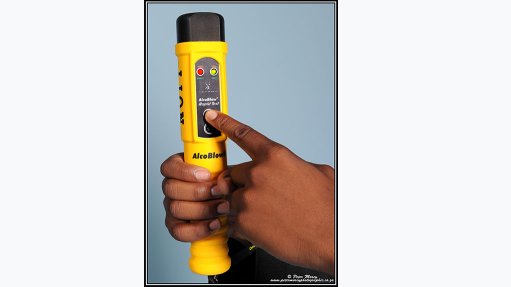
Developed to exceed the latest EN 15964 standards for police breathalysers proving that it will remain accurate and reliable for many years to come.
VISIT SHOWROOM



Press Office
Announcements
What's On
Subscribe to improve your user experience...
Option 1 (equivalent of R125 a month):
Receive a weekly copy of Creamer Media's Engineering News & Mining Weekly magazine
(print copy for those in South Africa and e-magazine for those outside of South Africa)
Receive daily email newsletters
Access to full search results
Access archive of magazine back copies
Access to Projects in Progress
Access to ONE Research Report of your choice in PDF format
Option 2 (equivalent of R375 a month):
All benefits from Option 1
PLUS
Access to Creamer Media's Research Channel Africa for ALL Research Reports, in PDF format, on various industrial and mining sectors
including Electricity; Water; Energy Transition; Hydrogen; Roads, Rail and Ports; Coal; Gold; Platinum; Battery Metals; etc.
Already a subscriber?
Forgotten your password?
Receive weekly copy of Creamer Media's Engineering News & Mining Weekly magazine (print copy for those in South Africa and e-magazine for those outside of South Africa)
➕
Recieve daily email newsletters
➕
Access to full search results
➕
Access archive of magazine back copies
➕
Access to Projects in Progress
➕
Access to ONE Research Report of your choice in PDF format
RESEARCH CHANNEL AFRICA
R4500 (equivalent of R375 a month)
SUBSCRIBEAll benefits from Option 1
➕
Access to Creamer Media's Research Channel Africa for ALL Research Reports on various industrial and mining sectors, in PDF format, including on:
Electricity
➕
Water
➕
Energy Transition
➕
Hydrogen
➕
Roads, Rail and Ports
➕
Coal
➕
Gold
➕
Platinum
➕
Battery Metals
➕
etc.
Receive all benefits from Option 1 or Option 2 delivered to numerous people at your company
➕
Multiple User names and Passwords for simultaneous log-ins
➕
Intranet integration access to all in your organisation
